
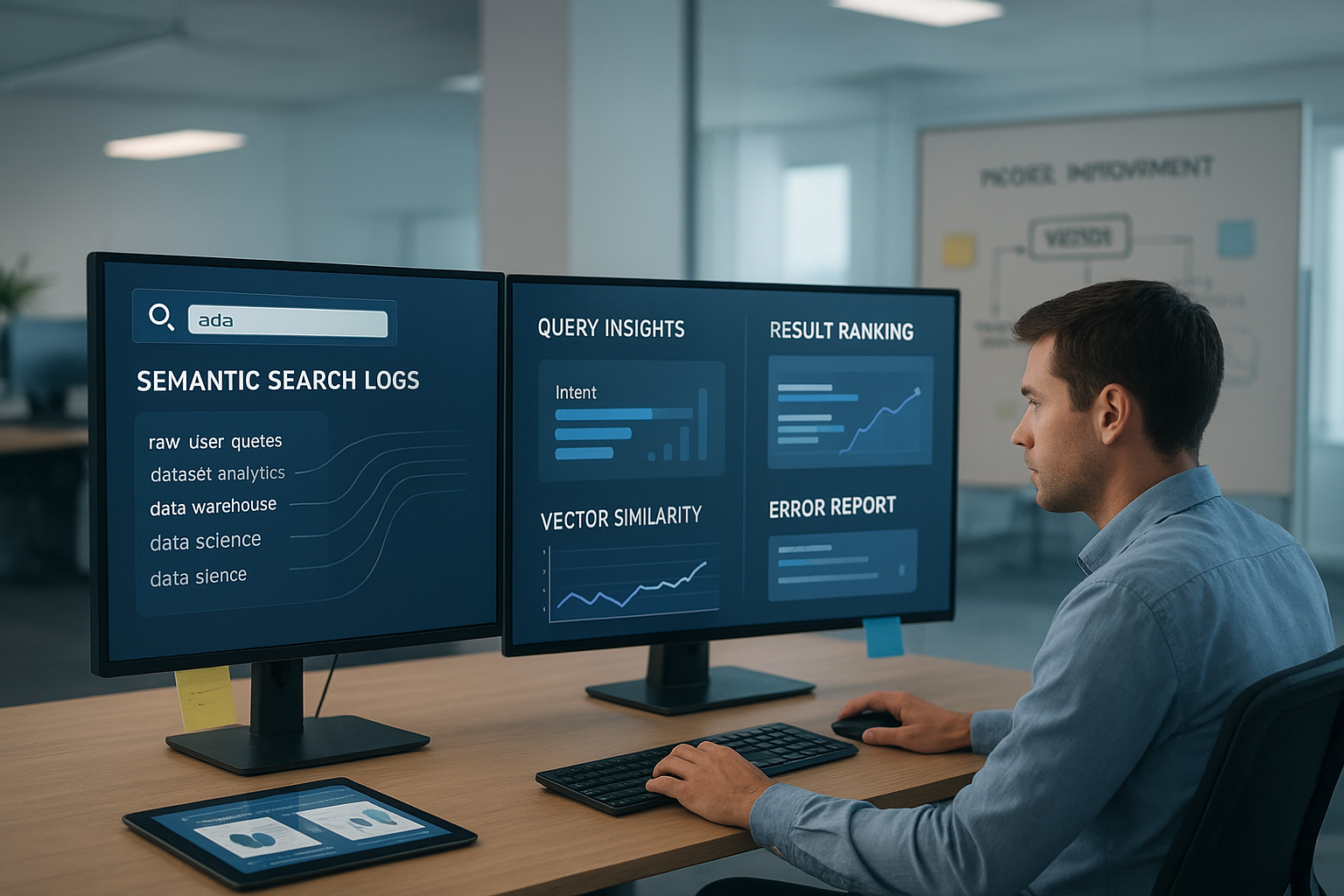
Analyzing semantic search log data is one of the most effective ways to understand how people interact with a search system. These logs reveal what users type, what they intend, how the system interprets that intent, and which results they receive. By studying this data, teams can pinpoint gaps in understanding, locate relevance problems, and uncover hidden insights about user behavior. As organizations rely more on semantic AI-driven search, the value of accurate logging grows even stronger. Tools like Queryinside make this process smoother by capturing detailed semantic search interactions and turning them into actionable insights for developers, analysts, and product teams.
Understanding What Semantic Search Logs Capture
Semantic search logs go far beyond traditional keyword logs. They capture the full picture of how the search engine processes a query. Key elements include:
User Inputs
This includes the raw text the user types. These queries often reveal:
- Natural language patterns
- Misspellings or abbreviations
- Multi-intent queries (e.g., “pricing + documentation”)
- Evolving terminology
Understanding raw inputs helps teams design better query parsing and intent recognition.
System Interpretation and Intent Mapping
Semantic search logs also capture:
- Embedding vectors
- Similarity scores
- Confidence levels
- Predicted intent categories
This shows how the system “thinks” and whether it misunderstood anything.
Ranking Decisions and Result Sets
These logs reveal:
- What results were returned
- How each item was ranked
- Why (based on scores, embeddings, metadata, filters, etc.)
This level of detail helps diagnose ranking issues, stale content, or weak semantic embeddings.
User Response and Interactions
Click behavior shows:
- Which result satisfied user intent
- Whether users pogo-stick (back and forth)
- If users refine or repeat their search
- When a zero-result or low-interaction search happens
Industry Statistics
- 68% of users won’t return to a site with poor search results (SearchNode).
- Users with successful search interactions convert 2–3x more than those who struggle (Econsultancy).
This shows how important it is to capture and analyze rich search logs.
Spotting Patterns and User Intent
Semantic search logs help teams uncover deeper behavioral patterns that indicate how users think about information.
Identifying Frequently Searched Topics
If many users search the same terms, logs show exactly what content should be:
- Prioritized
- Expanded
- Reorganized
This helps content teams and product teams align with real demand.
Detecting Misinterpreted Intent
Logs highlight:
- Queries the system consistently gets wrong
- Language the system struggles with
- Context-specific meanings (e.g., “python installation” could be software or reptiles depending on domain)
This allows developers to refine models and improve parse logic.
Finding Zero-Result or Failed Searches
Zero-result searches usually point to:
- Missing content
- Bad indexing
- Incorrect synonyms
- Weak embeddings
- Filter logic problems
Real-World Example
Netflix found that improving semantic understanding reduced “no result” searches by over 30%, leading to better engagement with their catalog.
Finding Errors and Fixing Relevance Problems
Semantic search logs expose problems that users might never report but that directly affect search quality.
Fix Incorrect or Illogical Rankings
Logs reveal:
- High-scoring irrelevant results
- Low-ranked but highly relevant results
- Duplicate or outdated content appearing prominently
Improve Embedding Quality
By comparing similarity scores with actual user clicks, teams can:
- Retrain embeddings
- Adjust vector weights
- Improve semantic matching rules
Clean Up Query Parsing and Filters
Log patterns show where parsing rules fail, like:
- Overly strict filters
- Misread date ranges
- Broken category mapping
Real-World Insight
Research from Baymard Institute shows that fixing relevance issues can improve eCommerce conversion rates by up to 20–60%, especially when addressing ranking errors.
Improving User Experience Over Time
Semantic search logs allow systems to evolve continuously rather than relying on occasional manual tuning.
Track Shifts in User Behavior
For example:
- Seasonal trends
- New keywords or terminology
- Emerging product categories
- Frequently paired concepts
Detect Issues Sooner
Instead of waiting for complaints or negative feedback, logs reveal:
- Drop-offs in click-through rates
- Queries that suddenly start failing
- Decreasing relevance scores
- Content that users aren’t finding
Make the Search Feel Smarter
A well-optimized semantic search leads to:
- Fewer refinements
- Faster task completion
- Higher satisfaction
- Stronger trust in the system
Example
Google reported a 30% reduction in semantic interpretation errors after building feedback loops directly from log analysis.
Creating a Continuous Feedback Loop
Semantic search log analysis is not a one-time activity. It works best when implemented as a continuous loop:
- Capture queries + interpretation + results
- Analyze performance and identify issues
- Train models, fix ranking, adjust parsing
- Update content and index accordingly
- Monitor new logs to validate improvements
This cycle ensures the search system grows smarter, more accurate, and more aligned with real users every month.
Why It Works
Modern semantic models improve dramatically with real usage data. Logs make these improvements predictable, measurable, and continuous.
How Queryinside Makes This Easier
Queryinside simplifies the entire lifecycle of semantic search log analysis by providing:
- Automated query logging
- Intent mapping dashboards
- Relevance and ranking monitoring
- Click and interaction tracking
- Trend detection over time
- Alerts for failing or zero-result queries
Instead of manually digging through raw logs, teams get clear visuals and actionable insights—making optimization faster and more reliable.
Conclusion
Semantic search log analysis is essential for understanding how users think, what they expect, and where search systems struggle. Expanded insights from logs help teams uncover misinterpretations, fix relevance issues, refine embeddings, and enhance ranking logic. Real-world data shows that improving search can boost conversion rates, reduce user frustration, and dramatically increase engagement.
By treating semantic log analysis as an ongoing feedback loop, organizations ensure their search experience becomes smarter, faster, and more accurate over time. Tools like Queryinside make this entire process easier by turning raw semantic data into clear insights and continuous improvements. As semantic search continues to evolve, log-driven optimization remains the most reliable path to delivering exceptional user experiences.